The comment is based on personal experience, observations and reading through more than half a century. The personal experience is from the Danish “Home Guard†and army from 1962 to 1994.
It will not address political-ideological issues such as whether conscription is a disgusting interference into the freedom of man, a good way to discipline and harden the youth or just natural “national serviceâ€.
It is updated now, because the Ukrainians have validated all the observations and conclusions of the article. They have and are using a mix for these manning options as Denmark did a generation back
***
I am not surprised that theoretical academics such as Professor Mikkel Vedby Rasmussen still wears the “emperor’s new military expert’s garb“, rejects conscription as obsolete irrespective of personal and historical experience and context. I am only ashamed that my professional colleagues and the media let him get away with the arrogance, as the point of view is not and cannot be based on critical use of experience.
Likewise I am not surprised when I hear that the various military unions lobby against conscription using superficial and partly faulty arguments. I am just unhappy if it means that Denmark will get far, far a less balanced and capable military than would otherwise be possible.
But I am both embarrassed and depressed when I hear from the politicians now involved in the negotiations about our Denmark’s future military defence that the Defence and Army leaders react to any idea of a partial return to the pragmatic mixed manning system that includes some conscription based reserve elements with lack of focus on the common Alliance mission in the Baltic Sea area as well as blindness and an inability to argue on the basis of mission context and experience.
***
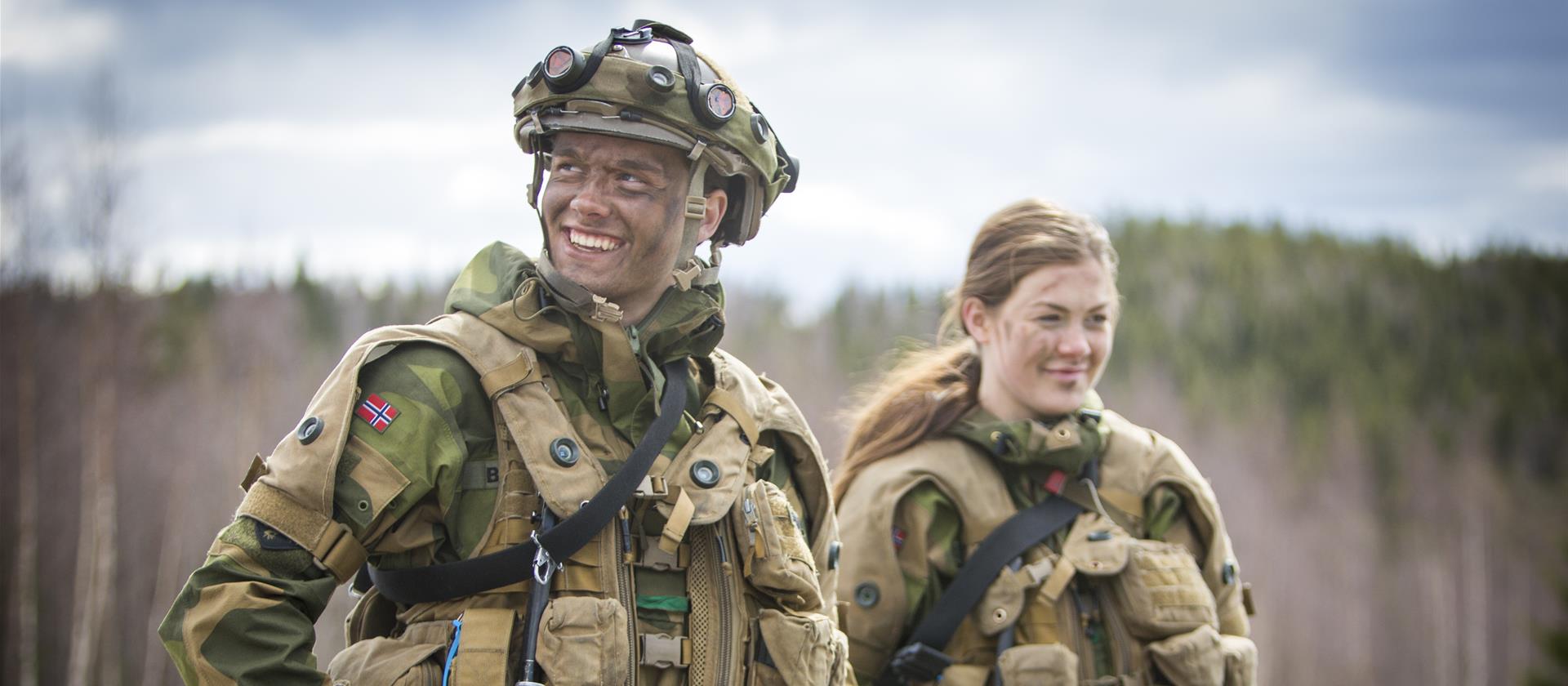
In Norway, the use of conscripts has finally become truly “universal” as the emerging Swedish version.
Four paths to force manning will be discussed in the vain hope of enlightening our CHOD and others with influence.
Firstly manning by contract employment and the creation of any reserves through service contracts with ex-contract soldiers.
The option is often misnamed “professionalâ€. Misnamed because the term imply a life or career long commitment to the knowledge, practice and ethics of a focused expert group.
Most private contract soldiers do not even commit themselves or stay long enough to learn a specialist soldier’s craft such as an all-round, expert tank soldier or infantry soldier capable of doing all jobs in an infantry section/squad. Either will take 3 to 4 years with varied practical peace-time activities or more than one half-year tour on the job in a demanding mission area.
Secondly manning by conscription to create reserve forces for mobilisation. However with intensive basic training beyond six months possibly also to create units with specialised combat readiness.
Thirdly manning by a mix of the conscription and contract employment, possibly both in the standing force and for the manning of reserve units.
Fourthly manning of reserves by civilian volunteers (named National Guard, Territorials and Home Guard to highlight the local main mission), motivated by a combination of nationalism and “hobbyismâ€, herafter named the “Volunteer Forcesâ€.
Each option will be discussed to identify the strengths and problems, and the end of piece will outline the connections of the option to the situation of the state.
1. Contract soldiers
The option creates a pool of armed state employees with the costs depending on market conditions and the chosen requirements for general and special skills. It does form a good framework for selecting and developing NCOs. The gradually accumulated pool of competencies will give flexibility in use of individuals and small elements in both domestic security and various international missions; however my Danish experience is that unit culture is far too hampered by a “trade union†attitude to demanding service, military discipline and risks, to make the force effective. This is natural as the situation mirrors the civilian society around the soldiers where most soldiers live with their families. In other armies that are kept more separate from their society in military accommodation.

Danish Army contract soldiers
However even for a Danish unit deployed to a mission area there seems to exist the risk known from other contract manned armies of combat units being infected by political extremism and macho culture. No matter which army, this can only be countered by visible and direct leadership and a formal and enforced military discipline.
If the force is intensively and broadly exercised and employed, it will create a framework for the professional education, training and personal development of its officers. However, the presently often limited force size and thus very few leadership positions means that only a small fraction of the officer corps will benefit, and the remainder will soon relapse into being uniformed administrators, not updated in their profession.
In my experience and from my observations the main problems related to a small state contract soldier army are the following: Where the individual soldiers may have gained a significant routine through various service, the subunits only have a relatively low level of combat readiness. They need 4-6 weeks of intensive and focused preparatory training before any deployment.
The reasons are that
1) the rotation between positions is high (and filling of positions now hampered and delayed by centralised “HR” management),
2) the subunits (companies) are not kept fully manned due to absence for various reasons such as professional and civilian courses and lack of funds to maintain full manning and
3) due to the Danish working hours limited employment and missing funds for overtime payment, soldiers are absent for compensation leave.
Before any deployment the company will have to be developed from something resembling a partly structured ad hoc pool of soldiers to one with fully developed unit cohesion and teams or crews of cooperating soldiers fully trained in their functions.
A second damaging problem for a small state army of contract soldiers is that there will never be funds for a complete and fully deployable combat service support (logistic) organisation and rarely for a sufficient combat support (fire support and engineer) structure that will give a resilience in a mission and make the contract force capable of more than symbolic action.
Thus the small state contract manned army is actually a “Potemkin Village“, unfortunately with too many of its officers in denial of this fact due to loss of professional eyesight or moral courage.
2. The conscripts
The first advantage of the conscript-mobilisation army is the high production of units for a given sum of money.
Another advantage is the focused training sequence from general individual soldier development over small unit and individual soldier specialist training to the creation of cohesive functional units – for immediate employment or for the reserve.
That the training activity is directed at the production of subunits rather than individual soldiers means that if the unit is kept together in the reserve and receive regular refresher training under its war time cadre and if that cadre is constantly monitored and tested to weed out incompentents, the unit can be employed quickly and be combat ready right after mobilisation for the mission it has been trained for.
A third advantage is that conscription gives direct access to the civilian society and its specialists such as doctors, nurses, engineers, mechanics, and various craftsmen. That makes it feasible for even a small state to balance the army’s combat elements with a full and resilient logistic organisation that is linked directly to the similar civilian functions.
The access to the most capable civilian human resources also means that the regular officer corps can be reduced to the number necessary to command and administer the peace-time army as it can develop a robust reserve officer corps of capable and highly motivated civilians and add them and whatever competencies they have developed to the war time officer corps.

Finnish conscript military policemen during training
However, the drawbacks of the pure conscript system can be significant. Its continued acceptance by the voters/taxpayers depends on the conscripts being given a positive and meaningful impression of their basic training. The conscripts must be inspired by dynamic and highly competent NCO-instructors and officers, who end up being seen as role models. The equipment they are trained on must be updated and relevant, and the intensity of the training sequence must be balanced both to avoid the impression of wasting time or accelerating too quickly. Thus the demands on the officers and NCO-instructors are very high.
At the same time repeated work as instructors for a several conscript classes will undermine the development of cadre professionalism because they never get beyond the basic level where they learn themselves by being tested and learning the humility required for successful tactical leadership. This is especially the case in the present short up to 6 months basic conscription training that ends before any realistic subunit and higher exercises that can give and test the cadre’s ability to lead in the field.
Due to the short basic training, the quality of the conscript system depends on reserve unit refresher training. Then the conscripts are older and likely to be even more critical and intolerant of any leadership folly and waste of time. Unfortunately the extended and demanding field manoeuvres where the mature conscripts could exercise together with their cadre became very rare in the Danish Army after the mid-1960s.
These older conscripts are likely to be especially critical of any officer or NCO who ignores that they are now mature persons that cannot be treated and motivated as they were in basic training. This means that they will look for the professional leadership qualities that are likely to be lost in cadres mainly employed as basic training administrators and instructors, leaderships that asks for and employ what the conscripts have learnt from live and work.
A final potential problem for this manning option is that it may be considered politically unacceptable that general conscription also means giving military training and expertise to groups of young people of potentially limited loyalty to the state. One such special case was the British decision not to introduce conscription to Ireland in 1916. Others, such as Estonia, has deliberately used the conscript service to strengthen the ties to the state of citizens of other ethnic and language background.
3. The mix
The mix of a conscription and a contract employed serving and reserve personnel was used and developed in various forms in the Danish Army from the 1950s until 2004. It was developed pragmatically with changing demands and gained experience, with the zenit reached at the end for the Cold War with the period’s framework of intensive unit and formation exercises. The motives were to get most for the money and to increase unit combat readiness.
The first steps were taken when reduction of the conscript service period undermined a rational conscript manning of tank crews and other demanding functions with drafted personnel. Later contract soldiers were used as armoured personnel carrier drivers for otherwise conscript manned armoured infantry companies to enhance training efficiency by making the drivers available from the moment three months into the training where the armoured infantry training started.

The first contract service soldiers of the Danish Army manned the Centurion tank squadrons. Here one of these squadrons at the parade in 1991 marking mothballing of the remaining Centurions. I commanded the sister squadron in 1984-86. In the Centurion Tank squadron in Vordingborg 30 kms to the south, one of the troop leaders was the young first lieutenant Bjørn Bisserup.
To keep key reserve officers updated and available during reserve unit refresher training, they were given “standing†reserve contracts committing them to serving some weeks every year. From the late 1980s such reserve contracts were given to NCOs and privates with key roles in supporting unit commanders and their staff, such as the core command teams. In this way it became more realistic to maintain reserve element and unit combat readiness at the very high level required by the Alliance. It also made it possible for logistics and other support unit command cadre and staff to participate in co-operation exercises with the brigades, the Jutland Division and the two regional army corps.
The mixed manning system also made it possible to rotate officers and NCOs away from repetitive service such as instructor at conscript basic training. Thereby this pragmatically developed system reduced the limitations of the conscript system at a very limited cost.
4. Volunteer soldiers
This manning option does not really compete with the other possibilities during peace-time. Then it just supplements the other options by harnessing the various attitudes and interests of the citizens at a very low cost.
The voluntary part-time soldiers join with very different backgrounds and willingness to commit their time and resources. The majority cannot be expected to reach a training level beyond participation in simple rear area guard duties unless they have a background as former contract soldiers or the earlier full conscript service.

Danish Homeguard volunteers during the Cold War
At the other end of the spectrum the system may see volunteers committing themselves to seek and achieve the expertise and training levels of special operations forces or to seek relevant formal qualification (in the Danish Naval Home Guard e.g. as captain of a search and rescue vessel).
If regular mobilisation unit standards are applied in the fields of physical and age requirements, cadre education and quality, equipment norms as well as formal military discipline, volunteer manned units can be trained and prepared for high intensity conventional warfare. This took place with the British Territorial Army units and the U.S. Army National Guard in both world wars and British Territorial Army battalions were planned deployed to Germany for rear area tasks during the Cold War.

Soldiers from the 30 U.S. Infantry Division during the Second World War. It was formed from volunteer Army National Guard units and was judged to be the best American regular infantry formation involved in the fighting in Western Europe 1944-45.
However, converting the Homeguard/National Guard to a competent and disciplined combat force is extremely hard to achieve if the people or its volunteers either see the organisation as a modern version of “Dad’s Army” or a nationalist party militia.

If not selected, trained, officered and disciplined for a regular conventional combat role, the volunteer force can only be employed in rear area guard and police support duties as Dad’s Army
Through the volunteer manning option, the forces can get access to civilian expertise otherwise only reachable through conscription. One problem with the option is that the organisation has to be even more alert to the risk of the development of clusters of political extremist and macho culture than is the case in the easier disciplined regular contract manned units.
The national situation and the choice
With Finland’s 1918-45 history, long border with Russia and large geographical area well suited for light forces fighting with strong artillery support and operating under the constrains of the 1947 Paris Peace Treaty, her choice of manning option was obvious: Full use of the maximum peace-time strength to create the largest possible post-mobilisation army supplemented by the paramilitary border guard under the Interior Ministry.

The Finnish Army combat doctrine was built on massive use of artillery fires in support of the infantry. Old pieces had to remain in service with the reserve units to achieve this. Here a 150 mm howitzer from 1940 during a 1987 exercise in Lapland.
That meant a short training-focused conscription period and combat readiness plus deterrence built on the ability to mobilise quickly combined with the Finnish reputation for fighting well in spite of odds.
As logical as the Finnish choice was both the British return to conscription as “National Service†in 1939 that mirrored the expectations of another continental war and the learning from 1916 to 1920 and the return to a contract soldiers army in 1920 and again in 1960 as the main mission in 1920 returned to stabilisation of the Empire and in 1960, when the step could be justified by the expected decisive role of nuclear weapons.
Denmark’s post-Second World War way was as logical. As the equipment was donated by allies and the NATO emphasis was on the largest possible forces in high readiness, the choice soon became an army created through 16 months conscription service with the last 12 months in readiness. As conscript unhappiness with the long boring months of readiness forces grew, and as money had to be found to replace the donated equipment, the army was reduced and ended with the mixed system described above and with the mission to stop the first Warsaw Treaty Organisation attack wave giving time and space for the arrival of reinforcements and crisis management to stop the war before nuclear holocaust happened.
The British 1920 logic can be seen as mirrored by the decisions of Europeans after 2001, when the history not only had ended dramatically on 9-11, but the threat had been replaced by something not easily countered by territorial defence forces.
However, as the U.S. Army knows from its overseas commitments: Every time a conventional war becomes extended, some type of conscription must be introduced to sustain the engaged forces. It the situation in Korea spins out of control and fighting starts, this will be clear again.